Los Angeles Rainy Season: A Homeowner's Storm-Prep Checklist
Updated · 5 min read
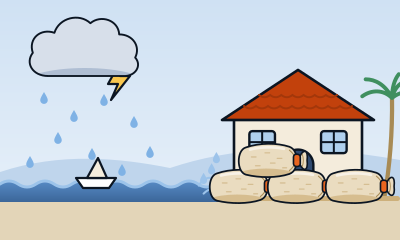
Southern California's rain arrives in bursts. Most of the year's total falls between roughly December and March, and a lot of it can come from a single atmospheric river that dumps inches of rain in a day or two. Hard, dry ground and hillsides that can't absorb water fast enough mean runoff moves quickly — straight toward the lowest point on your property. The good news: most storm damage is preventable with a weekend of prep before the season starts.
1. Clear the path water already takes
- Gutters and downspouts: clean out leaves and debris, and make sure downspouts discharge several feet away from the foundation, onto ground that slopes away from the house.
- Yard drains and channels: clear area drains, French drains and any swales. A drain clogged with leaves is the most common reason a patio floods.
- The storm drain out front: if the curb inlet on your street is buried in leaves, your street floods first. Clearing debris away from it (never reaching into it) helps the whole block.
2. Find your weak points
Walk the property and note every place water could get in: doors and sliders at or below grade, garage doors on a downhill driveway, window wells, crawl-space vents and the low corner of the yard. These are the places to protect first.
3. Get your sandbags before the forecast
When a big storm makes the news, sandbags across Los Angeles sell out and distribution points get lines. Order before the season and store them in the garage. Most homes need:
- about 20–30 bags per exterior door that sits at grade,
- around 100–120 for a two-car garage door,
- more for diversion walls along driveways or slopes.
The sandbag calculator will size a wall for you, and our guide to stacking sandbags shows how to build it so it holds.
4. Protect what matters inside
- Move valuables, documents and electronics off garage and basement floors.
- Keep a flashlight, phone charger and battery pack where you can find them.
- Know where your main water, gas and electrical shutoffs are.
5. Sign up for alerts
The City of Los Angeles sends emergency alerts through NotifyLA, and the county runs Alert LA County for unincorporated areas and county-wide emergencies. Many other cities in the region run their own systems. If you live near a recent burn area, alerts are how evacuation warnings for mud and debris flows reach you — see our guide to living below a burn scar.
6. During the storm
- Stay off flooded streets — a few inches of moving water can sweep a car away.
- Check your sandbag walls between bands of rain and patch gaps.
- If you're told to evacuate, go. Sandbags protect property, not people.